Pages

Thursday, July 25, 2013

Rought Time In Secret Fishing Spot

Rough Time in the Secret Fishing Spot

There is this secret fishing spot that we visit at least once a year. It is one of those places we feel is a remnant of what it was once like in the land of plenty, where fish were genuinely abundant, say similar to isolated lakes and rivers of Canada. It is a place primeval, primordial in a way, a place where time has stood still, a place where man seldom treads.  That is why it is kept a secret.

It was passed on to us by an old man who in his youth could go there, fight his way through the thickets, tolerate the onslaught of blood-lusting mosquitoes and deer flies while dragging his boat over land and bog. It is a place of leaches, huge dragon flies, deep cool holes, fallen trees and floating water weeds, but it is also the home of fish. These fish live there in all sizes but most importantly they come very large. Forty inch, shark-toothed Muskies lay like logs floating listlessly, crocodile like, eyes intent on young ducks. Big dark Bass violently grasp the rubber frogs and the Northerns slide through the water like torpedoes cast from a U-boat, slashing the thrown baits.

It is good to have a few of these spots so anglers can know what the real baseline is, to know natural conditions in the environment can do this. That is not to say fish cannot be removed from such a spot but once a heavy harvest is on, like so many places, the wildness will dissipate and the knowledge of the baseline will be lost. A new baseline will be set, one which has less fish, one that will not represent how it once was.

In the years we have traveled there, we have never harvested a fish, probably knowing we could, but still desperately wanting to keep it like it is so that we, or maybe a new inductee, might have the experience once again.


There are few of these legacy spots left because invariably one person will, in a moment of weakness or in a beer-induced moment of glee, tell another and the chain of knowledge trickles through the attentive anglers, some who may be more interested in their freezers. In no time, damage is done by those who do not respect the situation, fish numbers drop and the trampling of human feet begins.

It was that time of the year, maybe a touch late as the hot weather was sure to have made the weeds grow and the bugs hatch. There had been rains, and now it was even hotter. There never is a magic formula but we were prepared and of strong heart, maybe even foolishly, too eager.

On our arrival the situation seemed altered but still no signs of human usage, after all this is not a place where most folks would look and it is still not for the timid. An aging hobbler like me is a touch at risk simply because another crude stumble might find me skewered by a beaver-sharpened stick or embarrassingly covered with feted goose droppings.

We pushed and pulled the canoe through the fallen and piled underbrush only to find out that our friend the beaver had not done its handy work and a good portion of the retaining dam, that in part made the spot, had fallen into disrepair. It appeared to me the beaver were gone. Had they been tapped out?

We slid our way into the waiting water worried things had changed in our secret spot. The water level was clearly down. Not totally deterred, we started the usual game and in relatively short order managed to find the finned monsters hiding under an overly thick mat of half decomposed algae. Big pounding hits from Black Bass and Northerns rocked the boat but none were even close to being landed. Still we were content to know they were still there hungry, but not about to be easily caught in their shrunken lairs. The small changes of weather and missing resident beavers had definitely disrupted our wilderness outing.

About the time the bewitching hour of fish activity rolled around, the storms of summer found us trapped. The rains fell, and fell hard. In doing so, nature used her fat drops to alert every hell-bent, flying vermin of the swamp to our presence in their wild land. The swindling, dart-mouthed suckers honed in with a vengeance. We were not welcomed. We were now their target fish and they were fishing with weapons. The repellent washed off as fast as we could put it on. My only hope was the bulk of the biting scoundrels would concentrate on my partner who, in his great wisdom thought wearing shorts was a good idea. The lightening flashed as we paddled, plastic bag covered,  toward higher ground and the car a mile away.

In a wet moment of reflection, we felt all was still intact and the secret still kept. The only news to be disseminated would be to invite a nice beaver couple back and maybe plead to the heavens to treat us better in our age.


Sunday, July 21, 2013

Bugs of All Sorts

Many bugs go unnoticed,  with the exception of the ones that bite, like mosquitoes, the nasty ticks and an assortment of irritating gnats and some stingers like Bald-face Hornets. Oh sure, there are some pests of the food we eat that gets attention and that might include the rotund stinking grubs that like to eat my potato tubers, fat repugnant potato bugs, maybe corn ear worms, ash borers, Boll Weevils--ya, ya, there are lots of bugs to hate. They didn't really plan it that way. Reckon somebody did , though.

As a result of the few that may create discomfort like bot flies that lay their eggs under the skin so they can slowly eat us (not here thank God because the really suck big time--check photos http://images.search.yahoo.com/search/images?_adv_prop=image&fr=vmn&va=bot+fly) and the vegetable eaters, the others often get unnoticed and many vilified for doing nothing of any concern to us and our self-important, egotistical, arrogant personal existence.

So I just ran into a couple of beauties, at least I saw them as such, and thought it might be of interest to share them. The first is the lowly aphid, and I will admit killing some of these while working for Libby's  and yes, we used pane launched Parathion but it was before Silent Spring. The little bastards were damaging peas and Lima beans so that were though of as having-to-go. Bombed the piss out of them and everything else including our spotters---which wasn't me.

These aphids, however, were firmly attached to a lovely composite of the yellow nature. There on a leaf was a extended family of red aphids all with their feeding mouths firmly embedded in the stem just sucking up the juices of life. The plant didn't seem to mind as it was healthy and interestingly there was also present a nice population of ants who it seem were milking the aphids of honey drops. It was a small dairy operation so to speak.


We watched as the community pulsated and moved through the warm afternoon. Aphids are a simple lot so it was hard to tell if anybody was really having any fun but some were very fat and probably getting in position to attract a mate which I am sure meant some carnal excitement. I seem to remember aphids can reproduce with out sex so what is the purpose of eating.? Population growth? Do they work for the ants to make fiat currency?

My second bug of the day was the Polyphemus moth I ran into in Door County hanging on the window of the men's bathroom. I don't think it really liked bathrooms. It was just a coincidence because earlier I did see another monster fly by right over the beach looking very much like a bat.This beauty was fresh out of the cocoon and doing a little vibration move to dry off and get the wings up to snuff. It turns out moths don't eat anything so at this point in it's life it was all about getting it on with another moth of the other sex---unless it is a gay moth, which I suppose is possible.


I always though, rather mistakenly, that the Hornworm turned into one of these beauties but not so. They make what I call, Hawk moths, big but more jet like. Turns out these monsters like mostly trees and appear to only get aroused in the presence of Oak trees. I don't know what that is about. I like a good oak tree myself but really. To me a nice grassy field has more appeal.

I left all of these bugs alone and they left me alone. A nice treat if you will.

Permaculture---Revolution Watch

Like many folks in this changing world I have been exploring some agriculture possibilities, in a very small way of course, in that I do not have a farm but only a big back yard right in the middle of a small community.

 One of the possibilities I have watched is Permaculture, or I suppose it might be called Holistic farming even though there might be a difference. There have been great claims by the herbal-organic types that Permaculture is the way to go in that it is good for the land (being sustainable and all) and produces tons of organic foods. Well, that is very cool.

What they do is make sure that the land is used in such as a way as not to be destroyed for future generations and that exotic chemicals are not poured into the soil. The seem to shun pesticides and do things like rotate chickens through the pastures to keep bugs at a minimum. They also grow a wide variety of crops always looking to help the soil by adding back those things depleted, say nitrogen.


Many of us have seen great films of this and they are always very cozy, enticing and in truth, they work. Wonderful food is produced and one farm family and a few helpers (mostly they seem like volunteers and trainees) can provide for a substantial group of individuals producing all sorts of products from meat, to dairy products, berries, vegetables, fruits, eggs, really just about everything except maybe shrimp and shark. Possibly bottom feeding catfish or Talipia but still a rounded, but limited, meal.

In the winter time they might have a few stored items form market but generally the buying public would have to store up for that, lay away the summer goods.

Some folks have stated that the world of 7 billion could be easily feed in the manner and at the same time not trash the entire planet as we are doing now with all the chemicals and GMO crap.

Today while picking our organic beans, I gave a bit of a thought to these concepts some of which we practice. I knew as a kid working in canning factories, thousands of pounds of beans were processed everyday by using all those monster, diesel powered pickers  and sophisticated canning facilities, and that is not counting the fuel and chemicals used to grow the beans. The production levels managed by really a very few people, was profound.

It took me twenty minutes today to get 5 bags of frozen beans (and they were real good beans) but the idea of humans getting enough beans to feed 7 billion using these largely hand operated methods was unimaginable. It would take 3.5 billion people to do it. I was left seriously wondering about this Permaculture thing. Feed all the people of the world with organic food? Something just doesn't add up on that one.

We now have maybe 6 people raising thousand of acres of wheat in Kansas. How would we do that with Permaculture? Corn by the ton from one family and their quiver of machines and chemicals. Where would all those workers live in Kansas?---- in soddies?

Thursday, June 27, 2013

Revolution Watch----Climate Change

Now and then there are meetings or presentations on the big issues that are affecting us today. Yesterday there was a get-together in Stevens Point reviewing the issue of Global weather change. The presenters were all academics and one local city manager. All great folks and all well informed but reluctant to let fly for one reason or another---understandable.

It was aptly pointed out that global weather change was a fact, as was the issue of it being anthropogenic. It was for real, and it was a big problem. Nothing that hasn't been known for at least 5 years by anyone that has paid attention---which in this country is less than half. I would suppose that is why they reviewed the case, restated it, let's say. I mean, even George Bush said it was for real. The weather is getting warmer---just a set of statistics, math really.

There was a review of the possibilities of what this could cause to our living condition and this too doesn't really need much explanation as all one has to do is look at major weather events around the world to see dead people all over. There was some implication of the idea we have seen nothing just yet, because if this keeps up it will only get worse.

There was no real mention of top NASA climatologist James Hansen and his very dire predictions but still there was a real effort to get the message out.

So then it moved, by way of questions, to what could be done to mitigate the situation. Mostly there was talk of adaptations, of getting ready to deal with it implying the mitigation part was off the table or hopeless. I felt it was rather like, we all know the river is going to rise in the spring so jack your houses on stilts or fill some sand bags. I found myself at a loss for of a number reasons.

While the problem was stated, I don't think anyone really gets the seriousness of the issue. It was if we can just change our light bulbs to LEDs, drive electric cars,  and insulate our homes, slap up some PV panels, and things will work itself out.  Maybe most folks just think, I will do my part as best I can (and most of the folks there were from the choir) and not worry about what is out there---like going on in the entire globe. In the land of the swimmers below, they are bringing on line 1.5-2 new coal fired plants every week. There are 1500 power generating plants (mostly fossil fuels) in the planning stage right now world wide! And we are adding LEDs for mitigation, right!


I didn't feel that people are looking down the road to their kids and grand-kids. It was as if, I will take care of what I can do here and now, and the rest of the world will just have to slug it out. I couldn't detect any real urgency. I didn't sense any attempt to look at the world situation, to analyse this thing beyond our immediate lives. I am puzzled because, in truth, nothing we do makes any difference. All of the real issue are external of our lives here in the upper midwest.

Here is why. All of our problems are due to too many people using too many natural resources. The world population is expanding exponentially at 75 million more humans every fricking year. The GDP growth, or economic growth is also expanding exponentially at rates even greater than the population because everybody wants to be like us. This is a finite world. You can't do that. It would appear it makes no difference what we as individuals do unless growth rates of GDP and population are brought to a standstill. Nothing we do can keep up with exponential growth. I can easily give example after example of efforts being lost in the rush of massive population growth. (Boone Pickens failed 640 unit wind farm good for 1 million homes completed in 5 years---we have close to a million new homes every year for 3 million new US citizens)

Was there one mention of this growth situation at the gathering? Absolutely not. Totally forbidden. The issue disturbing to me is there are things that CAN be done. Remember ZPG? What about stable state economics? Growth Busters? It is out there and there is talk, but more and more, I  am now hearing writers simply saying, "You better dig in, because we will have to let nature sort this one out and she is not going to be nice about it".

If this meeting is any indication where folks heads are at, better learn to live close to the land and know your neighbors real well.


Tuesday, June 25, 2013

Rail Travel---Reflections


The Railroads of the Past
My Column for The Community Spirit--Update of previous post---sorta

Maybe thirty years ago we visited Amherst and drifted around town taking in the small town flavor which included a couple of old passenger train cars parked just north of the Wilson Street bridge. The cars were tired and clearly the remnants of the previous decades, maybe many decades.  (Painting by Ann Herzog Wright 1983)


We were drawn to them I suppose, because as kids growing up here in Wisconsin, we had used the trains to travel to a few big cities, like Milwaukee and Chicago. It was romantic, in a way, being on a train with a powerful diesel engine, among my young friends on our senior class trip, doing stupid things involving flatulence and profanity. Just memories.

When I was younger still ( and possibly involving those old passenger cars) the black, oily steam engines roared by my grandfather’s place in Illinois, spitting out smoke and steam. Monsters to a kid, all that steel and motion, the engineer who smiled at youngsters, who gave the sign of “I see you kid, and this is America”. My brothers and I waited each day for their timely passing, the chugga-chugga----the fading of the sound as the Doppler affect took over and they were gone. They were gone. The iron horse of history was gone there in ‘ 55 or so.

Seeing the old car here in Amherst in 1982 was a reminder. It is gone now and has been for years, I suspect, but hidden there under the soil on both sides of the road are still the iron rails. They are covered with brush and use, but still there as if waiting, maybe in vain, but waiting as a siding. Each time I walk by I remember. The trains still pass on the upper tracks but it is different, less personal, less a part of the small community, just a noise in the night, almost unseen. Kids don’t pay attention to the trains now.

But memories have a way of lingering because there must have been something good there, some romance, maybe fascination of moving, maybe opportunity, maybe a link with other magical places. Were they dragons of growth and industry?

Last week the local model railroaders of the Waupaca area may have lent some answers to the questioning memories. There it was, the massive layout of our area spread across the gymnasium.  Initially, one would think this would be the interest of the young ones but it was not. It was of my people reveling in the memories of the age of rail, past rail I should say, as modern rail is still here, but this was mostly rail of another time.

Different portions of the setup were made by different individuals and one would assume that each presentation reflected memories or points of interest from some years ago. Interestingly, Amherst was there, in part represented by a simple but aesthetic Amish farm, and there were small communities, all serviced by the trains. Along the way were the sights, elegant mills, even a few bums lounging, bottle in hand, in the hobo jungle somewhere, probably by Stevens Point.

What I assume was the Tomorrow River, wound its way through the country side and I couldn’t help but think of the rail river crossing to the north of Amherst, the one that heads east toward Scandinavia. Keeping it real some modeler included a couple of junked cars half dissembled along a siding.

Personally, I would have included more steam and in doing so would have burned a small piece of coal for ambiance. To add reality someone might add a housewife standing close to the track shaking her fist at the train as the stinking monsters spewed out coal dust over here newly hung wash---maybe that was there. There were many stories in the display, some not entirely of rails making. My favorite turned out to be somewhat hidden behind a cliff of rocks, all expertly crafted. There was a classic 21 window VW deluxe transporter, probably mid 60s, partially hidden by a grand oak. Next to the gorgeous van were 4 hippy chicks all in a state of undress, getting ready to jump in the Tomorrow River.

I knew I was home, and I knew the artist that put this display together had to be of a like mind---and our friend, Conductor Dennis, was found to be the modeler. The day was complete. It was true nostalgia of the grandest sort. I could just see the expression on the engineer’s face as he caught a glimpse of the naked beauties---and maybe the VW.

It was then, but not just then, that it seemed possible that maybe the complete train service may come back, after all it is the cheapest way to move people and material, less fuel per pound moved. The Amherst track still sits half buried there next to the bridge and there just might be new crop of hippies out there. I still have my VW bus.


Friday, June 21, 2013

Missionary's Position GMO Wheat---OOPS


A couple of years ago we visited the Palouse area of Washington where wheat is the call of the day and has been for many decades. I was quite a sight to say the least as the fields stretched in every direction over rolling hills.  Last week articles started appearing noting that not far from this location, but in Oregon, a strain of of Monsanto's GMO wheat had showed up in a farmers fields. ( http://www.businessweek.com/articles/2013-06-20/the-search-for-monsantos-rogue-gmo-wheat) (http://www.foodrenegade.com/gmo-wheat-escapes-tainting-crops-oregon/)

Interestingly, this particular crop was not supposed to have been released to the public because the rest of the world is having doubts about the safety of GMO crops. In fact, many countries have banded the stuff as being not fit for human consumption.  The problem comes when farmers try to sell it there is no market over seas where most of the sales take place. We in the US, of course, don't seem to mind as the media here doesn't really cover the issue and the big corporations control the law making and the narrative in the press. Still, the wheat has not been welcomed and was supposed to be a "secret".

There was a bit of a panic to see if the genes were in fact now scattered about the fields of America. So far it has not been found outside the one field---and of course, they are blaming "Eco Terrorist" for putting it there but no one knows how they could actually do that in that Monsanto is the only holders of the seeds.

The item that got my attention in all of this was the mention of other GMO nightmares that are now occurring because it seems every crop has now been genetically modified and many of them are slowly creating other problems. Some GMO plants are producing chemicals designed to inhibit insect attacks but in the process might be killing honey bees. Others are appearing to not be healthy for human consumption. Modified corn genes are finding their way into other varieties of corn thus taking away their natural natures and bio diversities.

Also noted is the fact that other plants are now adapting to to Roundup and becoming resistant to the nasty chemical. They are becoming "Super Weeds" that quickly take over fields and can not be killed by Roundup so more nasty chemicals need to be developed to prevent the loss of acreage to these monster weeds.

What it looks like is we just might have us a "Progress Trap" going on. We think we are doing so well with all of our technological gains only to find out the progress is a trap leading us to a worse condition, one that might become very harmful very fast. But then, we do have to feed 85 million more people every year, year after year. Something here is not making sense. Is there an active dialog going on?


Sunday, June 16, 2013

Revolution Watch----Controlling the Narrative

It is not hard to notice that in the last year there has been an all out effort by the predominate paradigm to control the narrative, that is the tone of all things that pass through the mainstream media (MSM). Some of the efforts are absolutely startling in that by doing what they are doing, our ability to understand the realities of life become very difficult.

In the process of not having some grasp of the world condition, life moves on, moves on to a direction that is very counter-productive to the Sustainable Revolution. This is obviously being done by the Powers to regain the confidence of consumers so they get back to doing the business of capitalism, and that is buying stuff.

We must be made to feel that everything is getting better and and therefore it is time to buy a new car or some more worthless shit and get those GDPs jumping---and sucking up the resources.

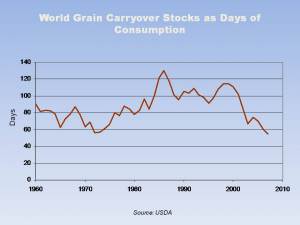
So this article comes out in the Economist, a rag that has respect, a rag I like to read to stay in touch with the world, because after all, the world is more than just the USA---at least I think so. So what we have here is a hype of an unimaginable magnitude. (shown below are a number of contrary graphs and sources listed---not from the economist)


First off, it seems everyday now we see articles in alternative press, MSM and official record keepers like the UN, Worldwatch, Pew, CIA fact book, National Geographic, and endless more that are asking the question , How are we going to feed the ever expanding population? The doom and gloomers say we are not, the optimist, techno-triumphalist and cornucopians say we can do it with magic.


So we get this dippy article in the Economist that implies we can do it, but the alarming thing is they never once mention population growth issues, the 80 million new people every year. They never once question our ability to exponential expand GDP and resource development in what is a very finite world.


So I start looking around at some collected graphs I have and what I find is very contrary to this bullshit. What the hell is going on? Well, it is an attempt to grab the narrative and in doing that get back to business as usual. And that is feeding the needs of the big corporations with no regard to the starving of the world. No wonder so many now think it is just a matter of time before the 4 horsemen go for a long ride.
(For another view)

 http://www.guardian.co.uk/environment/2013/jun/20/crop-yeilds-world-population