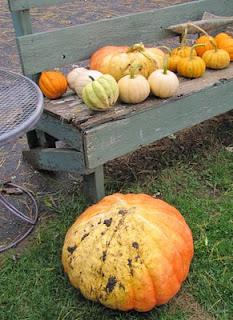
When we returned from our western sojourn we found some six squash, ya they are squash, greater than 25 pounds. They were things of beauty and like many garden experiences where we have done something right, I strutted around the yard like I was somebody. Well. I might have had a beer or two which always makes me feel like I am somebody---and a touch delusional.

In fondling the squash, and one was close to sixty pounds, we began trying to figure out just what to do with the gargantuan monsters. It was not like one could just cook them up and have a nice squash dinner, or a warm spiced squash soup, or even a giant pie. They were really too big to manage. I even had to have the local mussle-bound kid pick the thing and set it in the back yard. It was either that or use a come-along, a pulley system or a helicopter.
We concluded we were going to have to have a festival of sorts that featured squash dishes and invite everyone over we know. This would fill our social obligation of having a fandango once a year and put the squash to good use rather than just displaying them on the front porch as some pagan ritual----even though as pagans, we will being doing some of that anyway.
In truth, these beauties are a food source and this variety is very dense and has an abundance of tasty meat. I was wondering if these were developed by Native Americans to feed a large tribe. Used as a nutritious food storage supply (these puppies last until April), it is possible they could have been stored and eaten much later. They are impressive.

Well, just when I thought we had made a profound discovery, the following pumpkins were seen today in Marion Wisconsin. The biggest one weighted in at 1250 pounds and there were three others that were many hundred. The Indians didn't come up with these. This is the work of modern man, genetics, chemicals (LSD for pumpkins)---and a fork lift. At first thought, they seemed worthless but today I learned on my birthday, Oct 29, the earth will hit 7 billion people. Maybe God made these things in hope of feeding the masses-----or a hell-of-a-big pagan celebration.


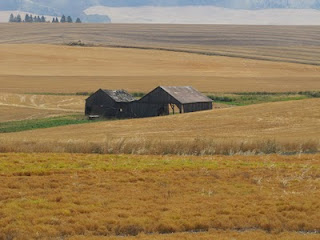 We saw a trend that always leaves me a bit cold. I will use the Palouse area of eastern Washington as an example. This region is known for its wheat production and driving through there it is impossible not to notice the millions of acres covered in golden waves of grain---mind you this is modern wheat, genetically modified, weed free from roundup, and planted with little thought of saving space for anything other than wheat.